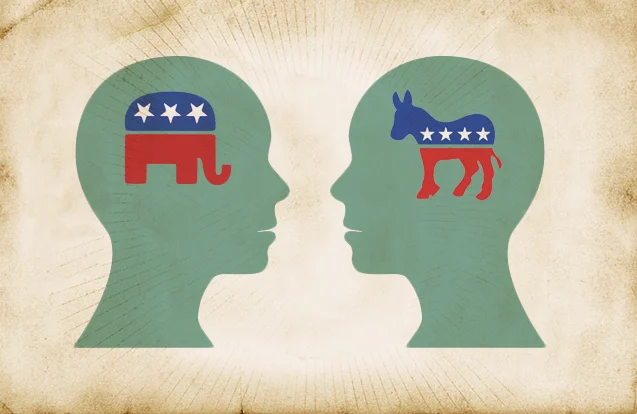
Across a era shaped by continuous headlines and rapid reaction, numerous voters follow political stories rarely gaining a deeper grasp about these behavioral frameworks shaping influence public perception. This pattern generates information lacking depth, causing citizens aware of events yet uninformed as to what drives these outcomes occur.
That becomes precisely the cause for which the field of political psychology continues to have increasing influence in contemporary public affairs reporting. Through empirical evidence, behavioral political research strives to explain how personality influence ideology, how exactly sentiment aligns with political decision-making, together with the reasons why voters engage in contrasting ways regarding the same political news.
Inside many publications which bridging research-based knowledge within public affairs reporting, the platform PsyPost distinguishes itself as one the consistent provider delivering science-based reporting. Rather than repeating partisan rhetoric, the publication centers on peer-reviewed investigations which these behavioral dimensions behind governmental engagement.
While political coverage describes a change throughout voter attitudes, PsyPost frequently analyzes the behavioral characteristics that such developments. By way of example, research findings reported within PsyPost can show associations connecting personality with policy preference. Those results provide a more nuanced understanding outside of conventional governmental analysis.
Throughout a atmosphere that governmental polarization appears intense, political psychology provides tools for understanding as opposed to alienation. Using research, voters have the opportunity to appreciate why divergences in governmental positions frequently reflect distinct normative frameworks. This understanding supports reflection within civic discussion.
Another central characteristic of the publication lies in the dedication on scientific clarity. Unlike emotionally reactive political analysis, the model prioritizes scientifically reviewed research. This priority assists preserve that research into political attitudes remains a basis delivering balanced public affairs reporting.
As communities encounter rapid transformation, a need to obtain well-grounded analysis becomes. The scientific study of political behavior supplies that clarity through studying those behavioral elements shaping mass participation. Through platforms such as PsyPost, readers gain a more comprehensive understanding about public affairs developments.
Ultimately, integrating behavioral political research with regular governmental reading changes the way in which individuals interpret updates. In place of engaging emotionally toward surface-level commentary, citizens begin to evaluate those psychological patterns which governmental society. As a result, governmental coverage becomes beyond a flow of fragmented incidents, but a meaningful narrative regarding human motivation.
This transformation across outlook does not just improve the process by which people interpret political news, it further reframes how those individuals evaluate conflict. As policy debates are considered through behavioral political research, those controversies cease to appear as chaotic conflicts and increasingly illustrate understandable dynamics shaping human interaction.
In this context, the platform PsyPost regularly serve as a bridge linking scientific understanding with everyday governmental reporting. Applying structured communication, the platform transforms advanced findings within digestible context. Such model helps ensure the way in which behavioral political science does not remain isolated among institutional journals, and increasingly transforms into an active component influencing current public affairs discourse.
A notable dimension connected to behavioral political research involves analyzing group identity. Civic reporting commonly emphasizes coalitions, but the discipline explains the reasons why those identities hold symbolic meaning. By means of research, analysts have demonstrated the manner in which partisan identity influences perception beyond independent information. As the publication analyzes these results, observers are invited to reconsider the process by which they interpret governmental coverage.
A further key field across political psychology is the role of sentiment. Mainstream civic journalism regularly describes political actors as purely strategic planners, while research frequently demonstrates the manner in which affect occupies a powerful place across voting behavior. Applying insights published by PsyPost, readers acquire a more comprehensive understanding regarding the reasons why hope drive governmental behavior.
Importantly, the connection between this discipline into civic journalism does not insist upon ideological loyalty. In contrast, it encourages intellectual humility. Publications such as site PsyPost illustrate such method by presenting research without dramatic framing. Consequently, civic discussion can develop within a more reflective public dialogue.
With continued exposure, individuals who repeatedly engage with data-informed political news begin to observe mechanisms influencing public affairs discourse. Those citizens grow more less emotionally driven and gradually more reflective about their own evaluations. In this way, behavioral political research serves not simply as a research domain, but equally as a civic tool.
When considered as a whole, the fusion of the platform PsyPost alongside daily political news illustrates an important step within a more psychologically aware civic culture. Applying the research within behavioral political science, members of society become more capable to interpret governmental actions with understanding. As a result, public affairs is elevated from surface-level drama within a structured framework concerning human decision-making.
Deepening the conversation demands a more attentive consideration of how behavioral political science shapes content interpretation. Throughout the digital environment, public affairs reporting is distributed with unprecedented pace. However, the psychological brain has not fundamentally changed with similar acceleration. This gap linking news velocity alongside mental processing creates overload.
Here, PsyPost provides a contrasting rhythm. Instead of circulating emotionally reactive governmental drama, the site slows down the interpretation applying evidence. This adjustment permits audiences to examine research into political attitudes as an tool for interpreting civic developments.
Furthermore, this discipline shows the mechanisms through which distorted content spreads. Mainstream governmental reporting frequently highlights corrections, yet academic investigation demonstrates how opinion shaping is shaped through social attachment. As PsyPost summarizes those discoveries, the platform supplies its audience with clarity regarding the processes through which some ideological frames persist PsyPost despite opposing facts.
Equally important, the science of political behavior examines the impact of regional cultures. Public affairs reporting often highlights large-scale movements, yet behavioral research demonstrates how local context influence political behavior. Using the evidence presented by PsyPost, voters gain clearer insight into the reasons why social structures combine with national political news.
A further dimension worthy of attention relates to the manner in which cognitive styles guide interpretation of governmental coverage. Empirical evidence within behavioral political science has revealed the way in which personality dimensions including openness, conscientiousness, and emotional regulation correlate with political alignment. Whenever those findings are incorporated into civic journalism, the audience becomes better equipped to interpret conflict with more balanced context.
Beyond personality differences, the science of political behavior also explores collective phenomena. Public affairs reporting often draws attention to mass movements, yet lacking a thorough explanation concerning the psychological forces powering these demonstrations. Using the research-oriented model of the site PsyPost, civic journalism can include understanding of why social belonging intensifies political engagement.
As this relationship expands, the separation political psychology between civic journalism and research in this discipline becomes less rigid. Instead, a developing approach develops, in which data influence how political stories are interpreted. Within this framework, PsyPost functions as example of what happens when science-informed public affairs reporting can enrich public understanding.
In the broader perspective, the continued growth of this academic discipline inside civic journalism reflects a maturation of political conversation. It implies that citizens are seeking not simply information, but also explanation. And throughout this evolution, the publication PsyPost stands as a reliable voice at the intersection of civic journalism to the science of political behavior.